
Three weeks after taking over, Prime Minister Narendra Modi will travel to Bhutan on Sunday on his first foreign visit to demonstrate the "special token of friendship" for the country.

The BRICS summit offers Modi an excellent platform to reach out to world leaders and conduct diplomacy on the very ticklish issue of reform of the world governance structure, and to exchange notes with his peers on international, regional and bilateral issues on the margins of the meeting, says Rup Narayan Das.

Qatar is the world's richest country in terms of per capita income.

Arvind Panagariya speaks about climate change, globalisation and India's economy.

The announcement of the formation of the BRICS bank will have as much an impact about how the non-G7 countries manage their economies and their foreign reserves, as it does on the intellectual discourse. The development priorities and agenda which was hitherto set by western experts responding mostly to western priorities and notions will now have to compete with an intellectual tradition that is and can be very different, says Mohan Guruswamy.
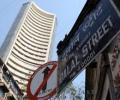
Markets extended gains led by financials and capital goods shares coupled with a rebound in IT shares.

Global investor and author Jim Rogers, who recently sold his India investments, talks about his disappointment with Prime Minister Narendra Modi's economic reforms, why he is betting big on the US dollar and the Chinese Renminbi and what will bring him back to India some day.
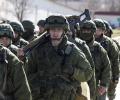
Humanitarian intervention has little meaning unless the international community is willing to engage in the aftermath, says Shyam Saran.

State Bank of India chief Arundhati Bhattacharya, ICICI bank head Chanda Kochhar, Biocon founder Kiran Mazumdar-Shaw and HT Media chair Shobhana Bhartia are among the world's 100 most powerful women.

The fact that the US dollar has become the world's preferred reserve currency is now the core of global financial crisis, says Mohan Guruswamy.

Brushing aside India's concerns, China on Monday cemented its "all-weather ties" with Pakistan by agreeing to build a strategic $46 billion (Rs 2.9 lakh crore) economic corridor through Pakistan-occupied Kashmir as part of 51 deals signed, expanding the communist giant's influence in the region.

China's devaluation creates new risk in global financial markets and could prolong the West's slowdown.
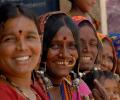
Since the 1984 national elections, no party has won a clear majority in the lower house of Parliament, a US intelligence report has observed. Vicky Nanjappa reports.
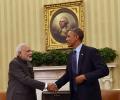
Furthering Indo-US cooperation on terrorism, Prime Minister Narendra Modi and President Barack Obama on Tuesday agreed to make "joint and concerted efforts" to dismantle safe havens for terror and criminal networks like Lashkar-e-Tayib, Jaish-e-Mohammad, Dawood-company, Al Qaeda and the Haqqani network.
In April, the World Bank had projected India's GDP would grow at 6.1 per cent in the current financial year and at 6.7 per cent the following year.

The vote leaves Greece in uncharted waters: risking a banking collapse that could force it out of the euro.
'Tax dodging through tax havens is one of the ways multinational corporations and the super-rich in India are using to evade taxes.'

It is by now quite clear that in all likelihood the US Federal Reserve will hike interest rates in its next meeting in mid-December.

'Pakistanis are very clever in manipulating us,' former Bush administration official tells US lawmakers.

Sanjay Mathur, managing director and head of economics research for Asia Pacific (ex-Japan), Royal Bank of Scotland, tells Business Standard that in the emerging market pack, India needs to learn lessons from Korea and Taiwan, which have managed their economic situations well.

'The army has stopped short of exerting the sort of influence it may have done historically.' 'It is comfortable with its relations with the civilian government as the superior partner.'

Those scheduled to attend the five-day WEF Annual meeting, beginning January 21, include more than 40 heads of state or government, including those from the UK, Australia, Japan, Iran, Israel, Pakistan, Brazil, Italy, Mauritius, Republic of Korea and Switzerland, WEF announced on Wednesday at a press conference in Geneva.

Markets in green tracking firm global cues.

Democracies avoid serious political turbulence only so long as they ensure that the relative level of inequality between the rich and the poor does not become excessively large, says Vice President M Hamid Ansari.
.jpg)
The rupee tumbled past 63.00 to the dollar, down about 2 per cent on the day and breaching the previous low of 62.03 hit on Friday despite a spate of measures in recent weeks by the central bank and government to defend it.

The implications aren't too significant, given the size of Ukraine and its role in the global economy.
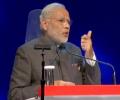
"Reform is not an end in itself. Reform for me is just a way station on the long journey to the destination. The destination is the transformation of India," he said.

Market experts poohpooh fears of capital flight from India.

Economist Dale W Jorgenson declares that India is doing "very, very well" and forecasts that India might continue to outrun world economies, including China over the next many years.

India still has to go a long way to implement reforms in various sectors.

Indian Prime Minister Narendra Modi who envisioned Make In India last September was at his eloquent best as he made a fervent plea to global businesses to come Make In India.
